The future of online courts in India


Online Courts picture


In reality, procedure translates the substantive meaning of Justice”

The one thing every lawyer will agree to.

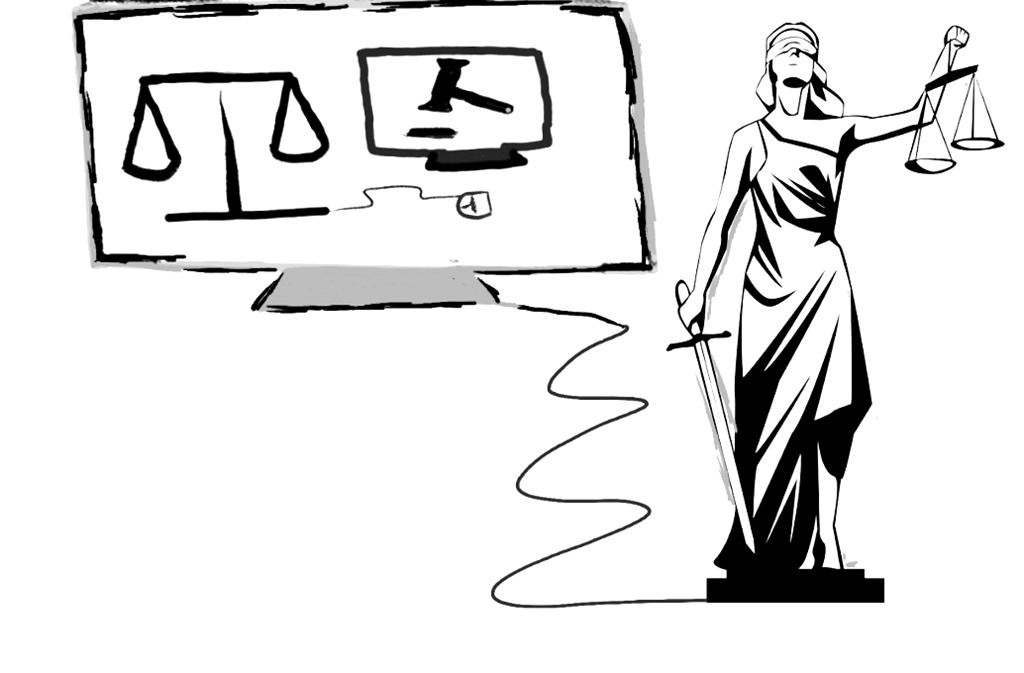
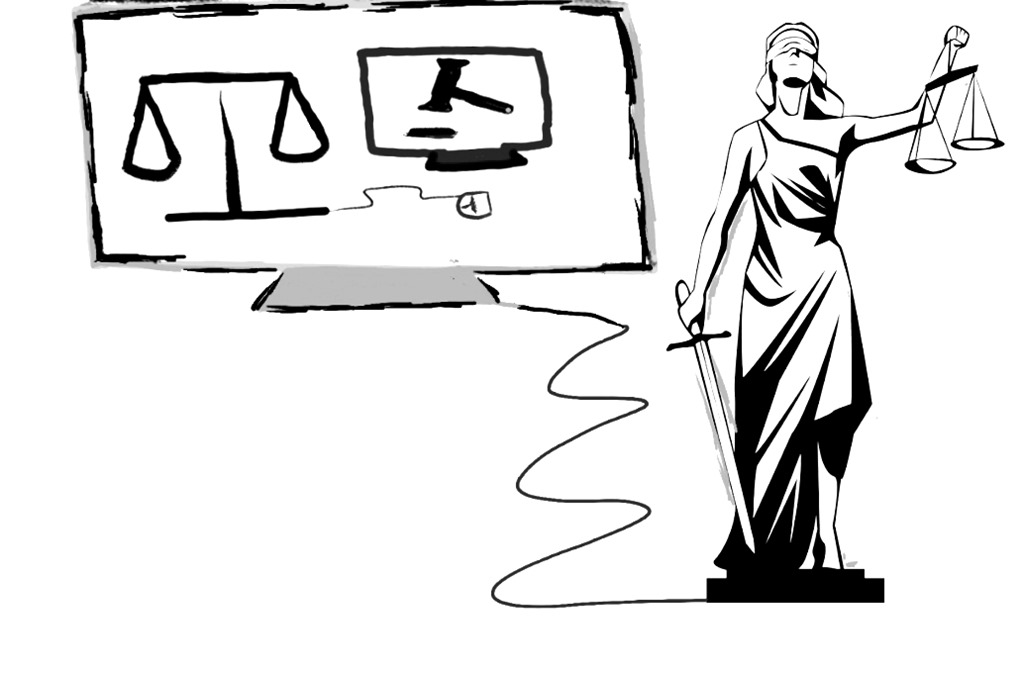
  • It took a pandemic for most of the Indian Judiciary to realise that the internet facilitates the access to Justice. By this I mean that the Judiciary is continuing its operations by holding hearings over video conferencing apps etc.  Despite the security concerns; by continuing to do what they do online, they’ve finally harnessed the utilities offered by the Internet . Such a cool thing. But the aim of this entry is not focused on praising their move to do so, but more pointedly, it’s focused on what happens after things resume to a state of normalcy? What does the Indian Judiciary need to take into consideration while dispensing justice through the Internet.

INVITE INDIA’S FINEST ENGINEERS


  • We’re one of the few countries who manufacture engineers in exponential numbers. Why do we not employ them in ensuring the creation of an accessible system? Although not an exhaustive list, here’s a couple of things I think the engineering communities can help out with:
  1. Installing Computers and Internet: It’s time to rewire the hardware of Court. By this I mean that make computers installed with the necessary word processor should be made mandatory. I can testify to the fact that even today computers and digitalisation are a rarity in the lower judiciary; why? Nobody has a bloody clue. HOW ON GOD’S GREEN EARTH DO WE NOT HAVE BASIC COMPUTERS AND INTERNET? For a profession that emphasis on standardisation and uniformity, we surely perform poorly when it comes to employing the tools that will assist in ensuring it. Sometimes I think they have not upgraded the system as a whole because they want to make sure it’s maintained that way. For heaven’s sake, I think it’s time that we have fibre optics running around in Courts. Justice is only done when things are made accessible!
  2. A functional and compatible website: Here’s another reality check, the websites of our Courts are tedious to understand and requires the skills of a professional navigator. It is not functional in the sense that it is everything but user friendly. As it is people caught in the system have to deal with lengthy procedure of accessing justice; as people who operate the system, the least we can do is ensure that the app or website is user-friendly. Given the grand aura that surrounds the Justice system, the prospect of working with the Indian Judiciary holds a lot more value than you think. This is more than enough to attract India’s youngest and brightest engineers. A Judicial Engineer Intern looks good on paper doesn’t it?
  3. A network exclusive to Judges and Judicial Staff:  Whether you like it or not, being an officer of the Court gives you access to an exclusive network of people and information, which ordinary people do not have. So why not translate this exclusivity by establishing an exclusive network that is solely for the members of this exclusive club I.e. Judges, registrars and other Court Staff. You wanna know the best part of this? You can design and tune the security requirements as per your requirement. And guess what, if you really want to get rid of the non-sense you have to go through the registry, with India’s finest engineers you can create a system of automatic listing on priority basis and not solely depend on people to ensure that your day gets to see the light of the day. Again, this all works out only if you want it to. I hope some higher up in the judiciary ensures a mechanical system in place regarding your case.

THE NEW AGE COURT STAFF


  • Now that you have your basic infrastructure in place, you need to make sure that the machinery is not just functional, but continues to remain so. Just because one knows how to use a smart phone for its basic functions does not mean the user is a born engineer. Registrars and other administrators must take an active initiative in ensuring that everybody involved in Court is acquainted with the mechanics of the digital system. The few years I have spent in the judiciary, the one thing I’ve always heard is that, “ e-filing is just a formality, it does not actually work”. Introducing a system only to realise that is non-operational is utter bullshit. I am surprised that nobody has bought this to the attention of the respective authorities.
  • Training in an accessible language: I’ve tried talking to Court staff in several Courts across our country; the amount they know about tech is appalling. Well, to be honest, I cannot blame them, since it’s not their fault the information they need to know is inaccessible. In other words, information is not available in the regional language they are familiar with. The medium of training the staff must be in the language they understand. For instance, it is pointless to teach your staff in English or Hindi, if their primary mode of communication is in Tamil or Kannada. Unless you are going to standardise the language of communication from the grass root level, you have to teach tech in a language that is familiar to those who are going to be handling it. Failure to do this will not only result into an inefficient system, but will be a futile exercise lost in limbo.
  • A handbook: Try providing an engaging handbook. The purpose of the handbook should be to provide information in an engaging and understandable manner. Bring in the locally popular publishers to help you out with this. The handbook should be written in a manner that trains every staff member to qualify as tech support. By doing this you will equip your loyal staff with skills that will be useful after retirement. Everybody needs some form of tech support.
  • Now that you have your basic infrastructure in place, you need to make sure that the machinery is not just functional, but continues to remain so. Just because one knows how to use a smart phone for its basic functions does not mean the user is a born engineer. Registrars and other administrators must take an active initiative in ensuring that everybody involved in Court is acquainted with the mechanics of the digital system. The few years I have spent in the judiciary, the one thing I’ve always heard is that, “ e-filing is just a formality, it does not actually work”. Introducing a system only to realise that is non-operational is utter bullshit. I am surprised that nobody has bought this to the attention of the respective authorities.
  • Training in an accessible language: I’ve tried talking to Court staff in several Courts across our country; the amount they know about tech is appalling. Well, to be honest, I cannot blame them, since it’s not their fault the information they need to know is inaccessible. In other words, information is not available in the regional language they are familiar with. The medium of training the staff must be in the language they understand. For instance, it is pointless to teach your staff in English or Hindi, if their primary mode of communication is in Tamil or Kannada. Unless you are going to standardise the language of communication from the grass root level, you have to teach tech in a language that is familiar to those who are going to be handling it. Failure to do this will not only result into an inefficient system, but will be a futile exercise lost in limbo.

IMPROVING THE ACCESS TO JUSTICE ONE STEP AT A TIME


  • I find it very cute that our Judicial officers talk about introducing artificial intelligence to improve the management of cases. But none of this smanshy shit works if you do not have your basic hardware configuration working at an optimal level. In other words, your internet, computer systems etch should, at the least be functioning. Although I admire the enthusiasm, I do not think digitisation should be implemented as a one-size-fits-all scheme. You have to tune the implementation of digitising to the state in which you’re trying to introduce this. Failure to consider this and apply a blanket formula of implementation will be futile in the long run.
  • Lastly, here’s an appeal to all those judicial officers, it’s time to widen your networking circles and bring in the young enthusiastic engineering kids who’ll help you out. With the right incentives, you’ll be able to attract the engineers who believe in the cause of Justice and want to transform it.

FORCE MAJEURE: THE HELL OR WATER HIGH CLAUSE

  • Old wives’ tales have it that in the event Hell falls or water rises, you must do you job, no matter what. If you are a party to a contract where the performance of which was interrupted because of the outbreak of the virus— you ought to pull that contract out and look for that section of your contract that talks about whether you can be excused for not doing your work during the lockdown . Although not headed as such, the fancy name the legal industry is asking you to take a peak is the clause of ‘force majeure’.

How do you recognise a force majeure clause?

  • History states that the phrase was conceived to mean: an unforeseen or foreseen but inevitable or irresistible event external to the obligor which makes it impossible for him to perform the obligation concerned. In other words, if you cannot perform the contract because of a war, epidemic or harsh storm, then you cannot be held responsible for not doing your part. This will vary slightly depending on the area you’re staying, do check up with the local rules that are applicable in your state, but broadly, if the following parameters are satisfied, then force majeure may apply:
    • If the event is beyond the control either of the parties; is not self-induced;

    • The nature of the event must be unforeseen or foreseen but inevitable or irresistible;

    • The event must make it impossible for the performance of the obligation

  • Here, the underlying principle is that possibility is the limit of all obligations (ad impossibilia nemo tenetu). That is to say, you are not expected to perform the impossible. As such, you must be in a position to show that because of the occurrence or non-occurrence of the event, you could not discharge your duties under the contract. Here, it is pertinent to take note of the fact that impossibility of discharging your obligations is synonymous to impracticality of discharging them. Moreover, the partially paralysing event should not just be external, but should not be attributable to either of the parties. To gauge a general idea of the type of events that usually render a contract non-feasible, see: https://ppp.worldbank.org/public-private-partnership/ppp-overview/practical-tools/checklists-and-risk-matrices/force-majeure-checklist/sample-clauses.

Law 101

  • The phrase force majeure owes its roots to the Civil Law System. Insofar as judicial interpretation is concerned, the axiom is that the clause must be construed with each case with a close attention to the words precede and follow it, and in regards to the nature and general terms of the contract. This means that obligors are exonerated only on a case to case basis. For all those who think you can hold those slackers who’ve refused to work during the lockdown, be wary of the fact that The Court will oscillate in the direction of saving the performing party from consequences he has no control of.
  • As far as case precedent on this aspect is concerned, the popularly referenced case is Taylor v Cadwell.[1] In 1861, the claimant hired a music hall in Surrey for holding four grand concerts. However, a week before the first concert was due to take place, the music hall was destroyed by an accidental fire. Consequentially, the claimant bought an action for breach of contract for failing to provide the hall; sought damages for the expenses incurred. On the 6th of May 1863, The Court held that in contracts where the performance depends on the continued existence of a given person or thing, a condition is implied that the impossibility of performance arising from the perishing of the person or thing shall excuse the performance. In this regard, The Court observed that this contract merely contemplates the performance of the obligation and not the excuse of performance in case of destruction of the person or the thing; here it is pertinent to note that the excuse is by law implied, because from the nature of the contract it is apparent that the parties contracted on the basis of the continued existence of the Music Hall.
  • Thus, having ceased to exist, without fault of either party, both parties were excused I.e. the plaintiffs from taking the gardens and paying the money; the defendants from performing their promise to give the use of the Hall and Gardens and other things. It is interesting to note that prior to this case, the position of the law was that a contract must be honoured whether water rises or hell falls. As far as the Indian Contract law is concerned, the relevant provisions you need to take note of is Section 29, 31,32 and Section 56 of The Indian Contract Act,1872.

Is ‘force majeure’ the same as ‘Vis Major’?

  • No. Just because they maybe related does not mean they are the same. The difference in definition lies in the scope and degree of the occurrence or non occurrence of the event. Events such as strikes, breakdown of machinery may qualify to fall within force majeure and not vis major or Act of God. In other words, force majeure is interpreted as a phrase that invites a larger meaning than Act of God. In this regard, let’s say because the pandemic, the government enforces embargos; therefore you were impacted to the extent that your duties were rendered as impossible. Will this constitute as a force majeure? As per Lebeaupin v Richard Crispin and Company[2], it will fall within force majeure. Is ‘force majeure’ the same as ‘frustration of contract’?

Is ‘force majeure’ the same as ‘frustration of contract’?

  • It’s mumbo jumbo like this that pays my bills. The interpretation of the letter of the law states that a contract is frustrated (and terminated automatically) when an event occurs that makes the contract simply impossible to perform, or the obligations become fundamentally or radically different to those originally undertaken. Sounds similar to force majeure right? If you’re one that has an eye for details, you’ll recognize that in order for a contract to be frustrated, the event should destroy the purpose of the contract.The crucial factor in trying to establish whether this doctrine applies to a contract is to identify the parties’ contractual obligations at the date of the contract, and how the particular event in question alters them.

  • This means that delayed performance, as opposed to events that materially alter contractual obligations generally do not amount to the frustration of a contract. If the delay is particularly long, or has a serious effect on contractual obligations (such as missing an event), the impact on the obligations might be sufficient to amount to frustration.

C. Why do you need to know this?

  • Whether you’re a judge, a lawyer or a law student, once this lockdown is lifted you need to be prepared to tackle the massive legal storm that is going to flutter your desk. The purpose of this entry was to introduce you to the terms that your lawyer might discuss with you. If you are interested in learning more on the fate of commercial business, I suggest you hit your history books and refresh your memory when it comes to business post World Wars and epidemics.
  • If you know you cannot afford a lawyer for something like this, don’t worry, the internet can be your professor. All you have to do is spend time learning how to navigate through online legal database systems and look for cases that have dealt with delivery of shipments and cargos in the context of failure of delivery or delay of delivery. I suggest this bracket of case laws since delivery of shipments have historically been subjected to some form of contingency I.e. in the form of wacky weather or failure of shipping equipment etc.
  • Plus, in the long run, with a basic understanding of this basic law, you will not sell yourself short. In the sense, you shouldn’t be picked on or bullied into something that is fundamentally exploitative and downgrades your value. I understand the economy is sinking right now, but trust the age old wisdom that states that knowledge is power. Presuming that your work was suspended because of the pandemic, with this information, believe it or not, you’ll level the bargaining playing field and make sure nobody holds you liable for something you could not do.

[1][1863]EWHCQBJ1122 ER 309;3 B. & S. 826.

[2] [1920] 2 K.B. 714.