Indian Journalism: Editing perceptions

Since its inception

Ideally, news is a reflection of the status quo of the system. But when Indian mainstream news channels and newspapers focus on the health status of Bollywood superstar, Amitabh Bachchan and his family over national security; the death of another actor over the devastating Assam and Bihar floods, you begin to question whether news is really a reflection of the status quo of the system. In other words, the Indian mainstream media does a pathetic job in deciding what news is worthy and what is not. With local shops closing down, and inability of people to earn a living unless you have access to a computer—does the state of the economy not qualify worthy of ‘ national headlines’. Does the state of frontline workers not qualify as ‘news’? Do the TRP ratings really decide the course of editorial independence? If a pandemic and the health of humanity  cannot shake the conscience of the press, what can? This post is an appeal to the non-journalist more than the journalist, because, at the end of the day—you have the power to to decide.

Why does the news matter and why should you care?

  1. The answer to this question may seem obvious because it is intuitive and does not require processing complex information. If it doesn’t then I am here to tell you that the news matters because in a society, you matter—and, the news indirectly reflects the things that happen around you. Indirectly, in the sense that it’s second hand information you’re receiving. It is also important to understand that news is relative, and this is because the news means different things to different people. To the viewers and readers, the news is a platform for a voice, to demand and spread information and to exercise your freedom to speech and expression. To the government, the media can serve as a mouthpiece and a loudspeaker to inform the people regarding its policies or initiatives. But you and I are both aware that this the language that we use to ‘teach’ and ‘educate’ kids about the ‘role of a media in a democracy’. To the history buffs and students of political science, propaganda machinery sounds apt. To continue the thread, to the media outlets, the news means TRP ratings, which in turn translates to money. Although, they exist ( as far as a democracy is concerned) so that

  2. If you take a step back and look at how this system functions, it finally boils down to what people want to see and who decides what people want to see.In the words of Patti Smith, People Have the Power; In order to exercise the power, you need to be informed. Merely being aware of your right to question and exercise your freedom to speech and expression is one thing—practicing it and figuring out how to do so is more important. I do not know what the news was during the early 1900s, but the news today is dominated with worrisome headlines without shedding an iota of attention to something good happening. I get it, the world is at a bad place right now, but it helps if the news can reflect a silver lining once in a while.

  3. The reason you need to pay attention to what you read, watch and come across is because more often than not, exaggeration and deception is more convincing than you think. For instance, today, the Indian news channels report the news in an aggressive tone with jarring graphics dancing to dramatic tunes. If news were a person , its representation would shock its conscience, in the sense that, “ was I really that serious? ” the news would say. In the midst of the high border tensions with the Chinese, the outbreak of a flood and the dire state of the economy—should the murder case of a Bollywood Actor be allowed to supersede the general state of affairs? This does not mean do not report it. Of course, you do, but prioritizing this over everything else that is happening in midst of the pandemic is ridiculous. To put things into perspective, the state of healthcare workers never caught the attention of so many people; do not even get me started on the lack of reporting done regarding the access and affordability of masks. None of the Indian Journalists so far even raised a finger against the invisible elephant in the room: The Pharmaceutical lobbyists. I mean does the  need for regulation of prices regarding basic safety equipment ‘not qualify as National headlines?’ If the doctors and the nurses die because of lack of access to working safety protective equipment—who will help the rest of humanity.

  4. You know what the best part of all of this is? you do not need to be a ‘trained journalist!’. In my dictionary, there’s no such thing( not that my dictionary should be the universal standard. I mean to add some perspective, that’s all). All you need to do is pay a little attention to the details and more importantly, consciously care for such details. The access to information is not a privilege, it is a right—and you get to demand it. Raising uncomfortable questions requires courage. Especially, when these questions are raised against those people who tell you what is happening around you. Sure they aren’t wrong, but remember this: they don’t just edit the sentence structure or the typographical parts of it—they exercise a form of editorial independence, which lets them add or remove all things making news. By doing this, they are adding and removing information that helps you form an opinion. In other words, they are in the business of editing your perception.

DOES THAT MEAN YOU DON’T TRUST ANY NEWS REPORTED?

Nope. that’s a little bit on the extreme. All you have to do is read through multiple sources and gain different perspectives on the same issue. While one talks about Black lives Matter, the other tells you what history teaches us, and another might tell you it doesn’t. Your job is to scan through all, without any judgement—and once you’re done—you filter out the stuff. And then ask questions. By doing this you are not just being informed, you are bridging the gap between the edited lines of the news; ensuring that access to the right kind of information is made available. In addition, you should take the time to encourage the smaller chaps who do a decent job in bringing the state of affairs of your city to the people. At the end of the day, we are all part of the loop and are recipients of incomplete information.

Manufacturing faulty bricks: The Indian Education system

1. The outbreak of the Coronavirus ( politically incorrect?) has severely disrupted and hindered several institutions, including the Indian Education system. Between the increased mortalities by the virus, Indian- Chinese tensions and the breakdown in the economy, the education system is losing the battle of coping with transforming itself in the face of the virus. Come to think of it, educational institutes are supposed to equip kids with the necessary know-how of coping with disaster; the inability of the Indian education system to grapple with the current hurdles is a testament to: those who can’t do, teach.

2. Given the gravity of the situation, you may consider this a little too extreme and inconsiderate; after all, nobody knows the exact coordinates to navigate through these testing waters. And yes, this is not a problem that is localised to India, but is faced by educational authorities across the globe. So, what makes India’s education system an embarrassment to the field of imparting knowledge and encouraging the exploration of human brain? To this end, you will have to understand the kind of system Indian students are expected to learn in. It is against this backdrop, I will then highlight how the pandemic has accelerated the rate of its deteoration.

The compulsive obsession over status, science and routine

3. As a population, like most Asian nations, today, Indians live in a society that functions on the unwritten rule of: the want of status and reputation; and as a parent, you are bound to drag your kid into this. This means that the poor chaps must slog and score more than their classmates, relatives, neighbour’s kid and god-forbid some random child prodigy. Even if it means forcing the kid to forgo of their dreams, ambitions and general sense of direction in life. In a social setting, how the kid does translates into a higher reputation of the parents, because who doesn’t love a kid who is good, well-behaved and follows society’s guidelines? What happened to the pursuit of happiness and knowledge? Where’s the Bruce-Wayne-like curiosity? Who erased the actual meaning of learning?

4. The cause to the above effect is the design of the schooling system. If you are the average Joe that went to a government school for all your life, you’re screwed. This is how the system works: As a student, you have a fixed timetable with fixed exams till the age of 18. Most subjects are mandatory and are taught because they have to be taught and not because teachers want to teach it(unless your teacher is passionate about the subject, and there are a handful of them). For instance, English is taught without the fundamentals of grammar and punctuation (if you notice some severe mistakes in my punctuations, just remember: I was a student of the system). English is not taught to develop a sense of appreciation for literature, language and linguistics. Social Studies is written by the victors and they do a pathetic job. I mean if you are brainwashing the kids, the least you can do is narrate history in a way that is engaging, energetic and convinces children. For most students, learning advanced Science is the default field of study because that’s what their parents want. There is a reason why our country is known for its IT support.

5. For most Indian kids, to live an adult life means to attend a good school, get a degree from a good college, work and get married, have a couple of their own-sub humans. Adding the same kind of  fuel to the same systematic loop for their kids, and thus creating the Indian society.  An Indian kid in their 20s is drawn by the prospect of ‘working’, ‘earning’ and ‘working’. Being adventurous in your 20s, living according to your young spirits and exploring the boundaries of human knowledge is something only kids with open-minded parents do.

6. The underlying principle for this social behaviour can be attributed to the kind of pedagogy that forces you to rote-learn your information, much like that of the Chinese.Growing up,I have been told several times, nobody cares what you write as long as certain key words are included or sentences are present. Although you may have some really good teachers, everybody is forced to forego their definition of learning and follow the syllabus set by the education board so that the kid gets the numbers; because, at the end of the day, the system rewards those who have higher numbers. I forgot to mention that so far, we’ve been operating under the assumption that you are one the kids that not just has access to school, but has access to teachers. Withdrawing this assumption would take you to the state of affairs in most schools in India. A fundamental right in theory, the access to education is not convenient to most people. Not everybody in India can afford to send their kids to study, not everybody thinks that little girls can rule the world someday and even if they do, sometimes the so-called temples of knowledge are so far away that they don’t see the point of education as a long-term investment.

7. Why does all this matter? When you pick up an ice-cream bar only to realise that it is imported from Thailand makes you wonder about the state of human affairs. As a country, can we not make our own Ice-Cream? I do not know the numbers and what they indicate statistically, but if the label of everyday items tell you that it’s not made here—it has to be some sort of an indicator? I mean for god’s sake, how hard is it to manufacture ice-cream?. I mean if the system was designed to teach young kids that dreams and aspirations include making your own stuff, doing your own stuff, and thereby contribute to your society—the world would be a different place. We don’t encourage kids to become teachers, historians or musicians; we don’t remind our kids to recognise and value the history of our nation; and we, certainly do not give the freedom to our kids to teach themselves, discover and explore new paths of living. I have been more than fortunate enough to have one of the most open-minded set of parents I could ask for, but most Indian kids aren’t as lucky. With all this in mind, imagine the impact of the outbreak of the virus on such a system.

THE CENTRAL EDUCATION BOARD AND COVID-19

8. With schools and colleges closed, teaching has gone online. But here’s the thing, not everybody has access to the internet or equipment that supports the internet. The way most Indian students are taught is already a disaster, imagine extending this online. In addition, the trouble is at the most rudimentary level, teachers do not know how to use the tech toys, and the cherry on the icing is that they do not know how to learn to use it, which, brings us back to square one : those who can’t do, teach—and teach incorrectly. For reasons unknown, the government’s solution to addressing the challenges faced by schools is to reduce the syllabus that is taught and not to address the difficulties faced in the ability to access the syllabus. They are trying to solve a problem that does not exist. They are not in-touch with reality and somebody really has to spell it out in a way that they understand. Oh wait! We can’t do that because effective communication wasn’t something we were taught nor learned on our own. No wonder half of the laws of this country are lost in translation.

9. Well then, what should the government do? With one of the youngest population on the planet sitting at home while the world burns, there must be something they can do? Theory within the confines of the classrooms means nothing if the young college kids are crippled by fear and anxiety. Believe it or not, some states were insistent on holding final exams for students despite the outbreak of the virus, and naturally, the students who went to the exam centre, contracted the virus. Apparently, the nothing can stop exams, even if it jeopardises the existence of humanity. Does it really take a pandemic to highlight the deep-rooted flaws in our system? The access to a simple thing like a decent education should not be a luxury despite it being a necessity. The impact of the lack of access to good education is the situation that currently floats. Most Indian kids with an Indian education can resonate with being another brick in the wall of society, except, this wall is tumbling…

recommended reads I: randomised


Books: one of the most interesting devices created by mankind. I believe it is one of the most underrated inventions. This post has been long due and is inspired by the people who put out their recommended reads. I am personally very fond of people who put out their recommended reads for the very reason that its very cool that they spent time and effort to put their views out there. In a world where most of our lives our dictated by the mantra of time and money, their effort to put out reviews of books they liked is commendable! Inspired by that spirit, I have listed 4 books that I found worth reading, they’re as follows:

The Natural History of Nonsense by Berger Evans

berger-evans-the-natural-history-of-nonsenseMuch like the theme of this list, this is a book that talks about a randomised set of things. In particular, it deals with the irrationality and misconceptions that persist in the minds of mankind. Though written in 1946, it is relevant today, if not more so, since common sense is a rarity today. As ‘rational-beings’ we’ve all seen that the outbreak of the pandemic has highlighted several superstitious beliefs that float in our heads; despite the advent and accessibility of scientific thought, somehow certain beliefs continue to remain in our heads. Overall a fun read, witty and smooth. He presents some great anecdotes in a humorous way.

 

Catch and Kill: lies, Spies and a Conspiracy to Protect Predators by Ronan farrow

catch and killOne of the most real-life thrillers I’ve read! ( probably because I haven’t read that many real-life thrillers). This book won Ronan Farrow the Pulitzer Prize in 2018 for Public Service. What is this public service you ask? He was one of the many who, through his reporting, propelled the #MeToo movement, and effectively bought down the has-been Mr. Hollywood, Harvey Weinstein. I usually don’t say you MUST READ read this or read that, but Mr. Farrows effortless and bold style of writing, makes it a MUST READ. Unlike the verbosity and wordiness of a lawyer, his style of writing is easy to understand, crisp and beautiful.

Barrel Fever: Stories and Essays by David Sedaris

Barrel FeverSedaris is a well-known humorists among the funny-people circle. This book is a collection of fictionalised short stories and a few non-fiction stories. The first couple of stories didn’t tickle my funny-bone, but going forward there were some moments that made me crack-up. The general tone is dark, misanthropic and occasionally shocking. But his wit and sense of humour is something that amused me. If you’re the kind who looks at reviews of books before you read it, then you’re in for a disappointment, since majority of the people don’t applaud this piece of work for several reasons. But the reason I liked this book was for the sole reason that it clearly articulated the thin line between humour and offense, bold and obnoxious. But try reading a not-so-acclaimed book once in a while?

Just Kids by Patti Smith 

Just kids --patti smithPatti Smith is one of my favourite singers. The depth in her tone and lyrics is beautiful. This book is one of the most lovely-reads I’ve come across. She offers a glimpse of her remarkable relationship with photographer Robert Mapplethorpe in the hippie days of New York. A book that feels that its written with an honest tone and a youthful spirit. An inspiring woman who tells the world how she just took things one-day at a time. I think this book will serve as a reminder to those who haven’t followed their dreams and intuition and have sold their soul to the world of meaningless muck. 
I’d love to hear your comments on this list, and would like to know what book I should read and review next. Looking forward to hearing from you through your comments!


Plagiarism: Academia’s propaganda

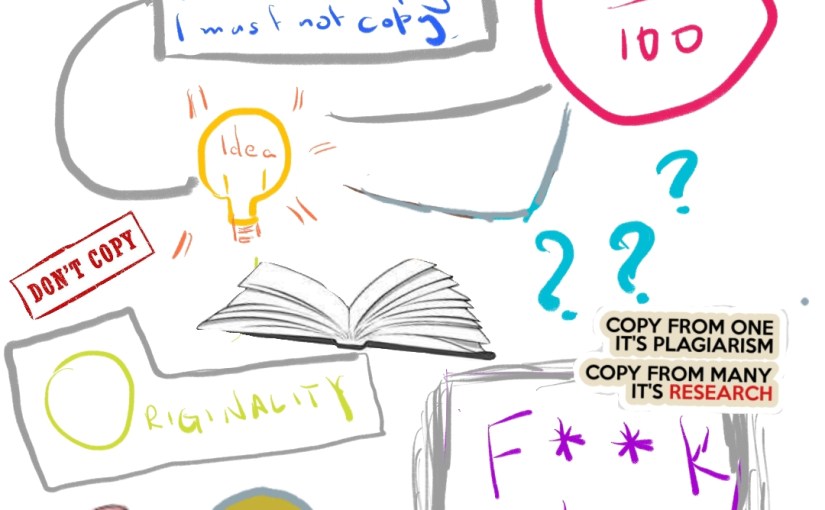
  • As far as writing as a student goes, I do not know what your college life has been like. But my law school professors always said that every paper is judged against the degree of plagiarism found by a computer. And if you ask what happens if the software is wrong; and how on earth do you measure ideas and creativity by allotting a number? my law professors used to resort the popular slogan of this how things are done.

  • I found this not just unfair, but a convenient excuse for my professors not to read my paper. According to them, the software could never go wrong and the plagiarism report was a reflection of my bad writing.  Being the smart-ass I thought I was, I parotted the popular phrase Good artists copy and great steal and naturally, this invited a week’s suspension without attendance. Given that I had to maintain 75 percent attendance as part of being a student at the institution, this wasn’t one of my smartest decisions, since a missing classes for a week can negatively impact your overall attendance. In hindsight, I should’ve known better. But at the same time, this little experience taught me what college professors often, on purpose don’t tell you i.e. Good artists do copy and great artists do steel. In other words, to copy is not a crime unlike what the academics tell you.

Understanding Plagiarism

  • Etymologically, the word is a derivative of Plagiarius meaning kidnapper or copycat.  There’s a wide spread debate regarding the carbon-dating of the of the term. Popular lore states that the origins of this non-recognized legal crime dates back to the days of the Roman Empire; that stories and poems of poets were copied and recited to large gatherings without attributing credit to the original story-teller or poem-reciter. This pissed off most of the story tellers who, then declared, those who recite or narrate without attributing credits shall be punished, or so the story goes as per my esteemed professor in Intellectual Property Rights.[This is the douche bag who suspended me]. So much for attributing credits, he never told me where the story came from. It felt like he was a teacher not of law, but of hypocrisy.

  • Still, there’s a lot that doesn’t make sense to me. For starters, what is the crime? Is it the failure to give credits to the original creator of the idea or claiming an idea that is somebody else as yours? To decode what exactly plagiarism means, let’s look  every student’s greatest nightmare:  Uncle Turnitin. A software that tells you that your paper is highly plagiarised.  According to  Uncle Turnitin, there are 10 commandments that determine if your writing is plagiarised I.e.

        1. Clone: If you directly copy somebody else’s work and claim it as yours.
        2. Ctrl+C: When you copy certain sections or paragraphs without referencing its source. ( Only noobs resort to this).
        3. Find + Replace: When you change certain key words and phrases but retain the essential content of your source.( uh?).
        4. Remix: When you paraphrase from multiple sources and make it fit together. ( Does that make every song that has been remixed plagiarised?)
        5. Recycle: Borrows ‘generously’ from another writer without saying its from them.       ( Great artists do indeed steal).
        6. Hybrid: When you copy paragraphs from cited in another paper and do not attribute its source.( Why not remix?)
        7. Mashup:Are you kidding me? Apparently, it’s when you mix copied material from multiple sources.
        8. 404 Error: When you include citations that point to non-existent or inaccurate information about sources. Hell no. Really? For a Plagiarism software that determines literary theft they surely do a poor job in naming this kind of theft. By this I mean that this is a concept all you nerd programmers maybe familiar with I.e. the Hypertext Transfer Protocol Standard response code 404(“ HTTP 404, Page Not found or Server Not Found”). For those who are not familiar with what this means, this code appears when your browser communicates with your server, but could not retrieve what you requested.
        9. Aggregator: This isn’t as aggressive as it sounds. In the sense, it is the kind of thing of essay you submit if you ask somebody else to do it for you I.e. it may contain proper citations but the paper contains almost no original work. Turnitin, you’re now pushing it.
        10. Re-tweet: Real smooth, so much for originality. According to Turnitin, despite including proper citation, somehow your work relies too closely on the text’s original wording/ structure. What the? I am attributing credits, but yet you[Turnitin] feel that it’s too similar to the original text? You’re acting like my grumpy grandpa.
  • I do not know about you, but as far as I am concerned most of these principles do not make sense. Why you ask? To this, I ask you to consider the following questions:
    • Do original ideas exist?
    • What’s the point of punishing a ‘literary theft’ ?
    • Who wins?

I. Do original ideas exist?

  • On my quest to improve the way I write and communicate, I fortunately stumbled on The Art of Plain talk by an Austria- American author, Rudolf Flesch. He says that to write effectively, you must be in a position to formulate the outline or shape of your writing. As simple as this sounds, to create an outline, you must coherently visualise and articulate your idea. According to Mr. Flesch, to do this, you must understand where ideas come from. Ideally, you’ll have to spend more than a lifetime understanding the nerosceinces behind this, but Mr. Flesch tells us that if you have a brief idea of this, it’ll take you a long way. Thus, to this extent, every writer will tell you the more diverse experience you have, the more perspective you can bring in. And one of the easiest way to gain perspective is to peak into another person’s experience I.e. through books.
  • Similarly, every musician, director, activist, lawyer and judge will testify  to the fact that books have a way of influencing your lyrics, perspective, view-point, argument and judgement. So in that sense, no idea is ever ‘original’ so to say. In other words,  every idea is the sum of the experiences you’ve had, even if these experiences are a second-hand account of it. Thus, when you create an outline of your script, lyrics or opinion—Although they maybe yours at the end, they are essentially the resultant vector of the scope of experience and information you’ve processed. Also, consider the roots of the word ‘original’ which mutated from Latin and French that denoted begining, birth or first. Now here’s the thing, you and I are definitely not the carriers of first principles as far as generating ideas are concerned and thus, every idea you have is a derivative of what is considered as the ‘original idea’.
  • So what the hell is all this racket regarding stealing ideas? Plus, by the standards of uncle Turnitin; how the fuck do you measure the ‘ originality of a piece’ through numbers? I get the universality of language spoken by numbers, but given humanity’s versality and diversity, what do we want to achieve by assigning numbers to something that is a by-product of an organic process generated by our neurons?  With all this, ask yourself this: are ideas ever original?

II. WHAT’S THE POINT OF PUNISHING A ‘LITERARY THEFT’?

  • This is a question to the strict-law-abiding-well-read faculty members of law schools everywhere: by deeming a piece of writing as ‘plagiarised’ what purpose do you seek to achieve? To ensure that your deep-seated ego of ownership of some form of Intellectual Property is satisfied? really? How’s that worked out for you so far?
  • To put things into perspective, nobody held Apple responsible for ‘stealing’ Xerox’s idea of a mouse or nobody declared the winner of The Current War between Einstein and Nikola Tesla. As limited as these examples might be, you can’t deny that Apple and Einstein were the winners, since their ideas were translated into something tangible in reality; their smart marketing strategy invited unmatched world-wide recognition of who they were. If stealing ideas was illegal, that makes every billionaire a crook, a definition, to which, I do not personally subscribe to.
  • Alternatively, let’s consider if plagiarism was actually punishable by law, what would that look like? A world more chaotic than now, for sure. If uncle Turnitin’s standards determined the law[think on the lines of corporate lobbying here],then every sane person will be labelled as a ‘literary theft’.  Go a little further, if you were found guilty of this charge ; you were punished with a sentence of imprisonment– prisons would be one of the most intellectual places on planet earth. Come to think of it, most of the educational institutions fit within this definition, don’t they?
  • Thank god that our laws do not recognise this unreasonable, delusion form of crime that academic circles recognise.

III. WHO WINS: US OR THEM?

  • The academic circle treats you like another brick in the wall and you feel that this creates an Us vs Them divide. Noam Chomsky and others explain the purpose and power of large institutionalised systems. It’s not just about your educational system, it’s about what they do and why they do it. Most and read this again, NOT ALL educational systems survive on two universally accepted forms of currency: Money and reputation. In other words, If your institution aligns with satisfying those interests that come with deep-pockets, your institution gains a lovely recognition within the required academic and professional circles.
  • How is this related to plagiarism you ask? If you were as unlucky as I was, then your professor is not just a stickler to rulers but is a sycophant to their immediate boss, who in turn, is friendly with the guys that hold a deep-pocketed interest in your university. Here, interest could mean money, religion or some other shade that plagues the orientation of your teaching. So anything that disrupts the chain of interest[ which may include your supposedly plagiarised paper] will serve as a liability and if to many hands get to it, may destroy their so-called reputation.
  • For the longest time, I couldn’t make sense of what Pink Floyd sung, and my long term suspension,  because of this stupid plagiarism nonsense put things into perspective. And ever since, I believe that the longer I was in law school, the more I learnt in the negative. In other words, among other things,  it took 4 years for me to understand that determining whether your writing was plagiarised was a form of power they wielded so that they can remain in control of your ideas, and what you are.


The future of online courts in India


Online Courts picture


In reality, procedure translates the substantive meaning of Justice”

The one thing every lawyer will agree to.

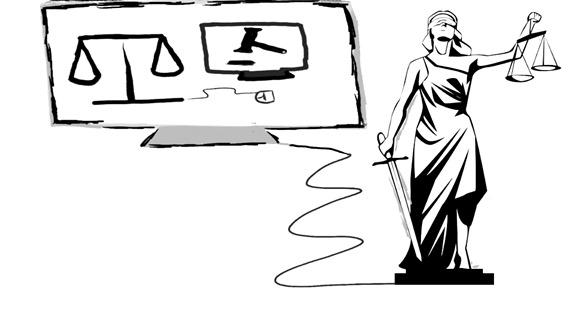
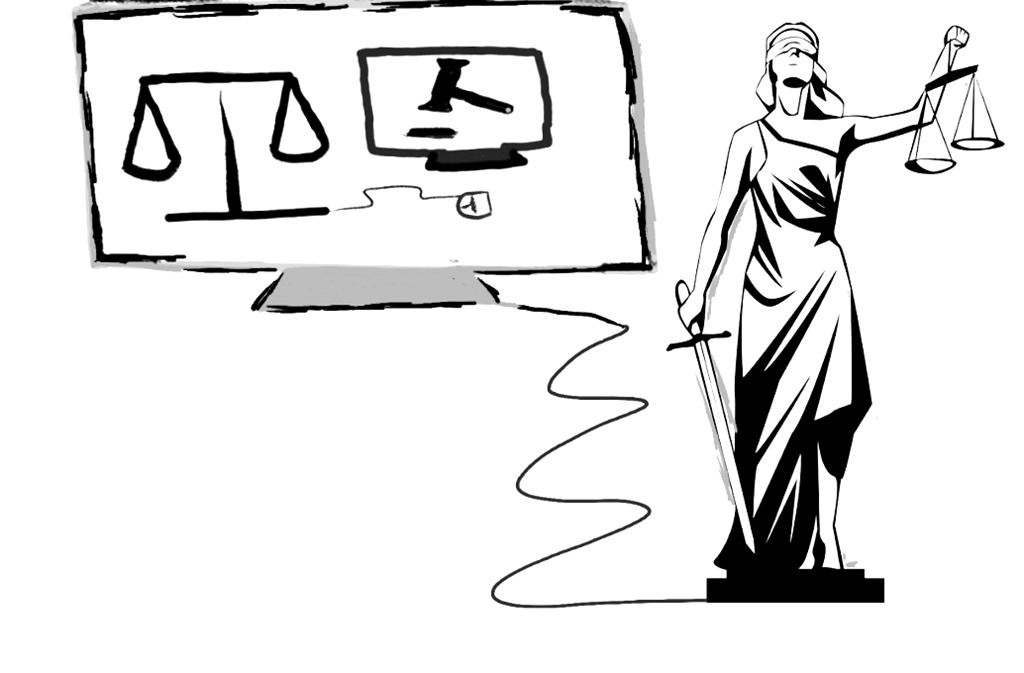
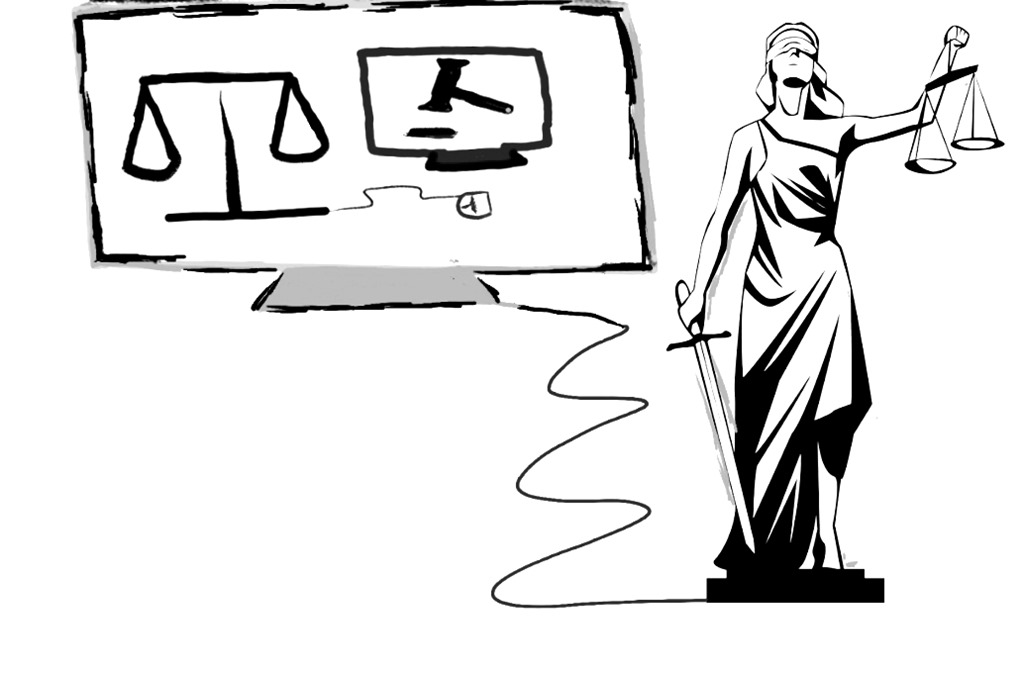
  • It took a pandemic for most of the Indian Judiciary to realise that the internet facilitates the access to Justice. By this I mean that the Judiciary is continuing its operations by holding hearings over video conferencing apps etc.  Despite the security concerns; by continuing to do what they do online, they’ve finally harnessed the utilities offered by the Internet . Such a cool thing. But the aim of this entry is not focused on praising their move to do so, but more pointedly, it’s focused on what happens after things resume to a state of normalcy? What does the Indian Judiciary need to take into consideration while dispensing justice through the Internet.

INVITE INDIA’S FINEST ENGINEERS


  • We’re one of the few countries who manufacture engineers in exponential numbers. Why do we not employ them in ensuring the creation of an accessible system? Although not an exhaustive list, here’s a couple of things I think the engineering communities can help out with:
  1. Installing Computers and Internet: It’s time to rewire the hardware of Court. By this I mean that make computers installed with the necessary word processor should be made mandatory. I can testify to the fact that even today computers and digitalisation are a rarity in the lower judiciary; why? Nobody has a bloody clue. HOW ON GOD’S GREEN EARTH DO WE NOT HAVE BASIC COMPUTERS AND INTERNET? For a profession that emphasis on standardisation and uniformity, we surely perform poorly when it comes to employing the tools that will assist in ensuring it. Sometimes I think they have not upgraded the system as a whole because they want to make sure it’s maintained that way. For heaven’s sake, I think it’s time that we have fibre optics running around in Courts. Justice is only done when things are made accessible!
  2. A functional and compatible website: Here’s another reality check, the websites of our Courts are tedious to understand and requires the skills of a professional navigator. It is not functional in the sense that it is everything but user friendly. As it is people caught in the system have to deal with lengthy procedure of accessing justice; as people who operate the system, the least we can do is ensure that the app or website is user-friendly. Given the grand aura that surrounds the Justice system, the prospect of working with the Indian Judiciary holds a lot more value than you think. This is more than enough to attract India’s youngest and brightest engineers. A Judicial Engineer Intern looks good on paper doesn’t it?
  3. A network exclusive to Judges and Judicial Staff:  Whether you like it or not, being an officer of the Court gives you access to an exclusive network of people and information, which ordinary people do not have. So why not translate this exclusivity by establishing an exclusive network that is solely for the members of this exclusive club I.e. Judges, registrars and other Court Staff. You wanna know the best part of this? You can design and tune the security requirements as per your requirement. And guess what, if you really want to get rid of the non-sense you have to go through the registry, with India’s finest engineers you can create a system of automatic listing on priority basis and not solely depend on people to ensure that your day gets to see the light of the day. Again, this all works out only if you want it to. I hope some higher up in the judiciary ensures a mechanical system in place regarding your case.

THE NEW AGE COURT STAFF


  • Now that you have your basic infrastructure in place, you need to make sure that the machinery is not just functional, but continues to remain so. Just because one knows how to use a smart phone for its basic functions does not mean the user is a born engineer. Registrars and other administrators must take an active initiative in ensuring that everybody involved in Court is acquainted with the mechanics of the digital system. The few years I have spent in the judiciary, the one thing I’ve always heard is that, “ e-filing is just a formality, it does not actually work”. Introducing a system only to realise that is non-operational is utter bullshit. I am surprised that nobody has bought this to the attention of the respective authorities.
  • Training in an accessible language: I’ve tried talking to Court staff in several Courts across our country; the amount they know about tech is appalling. Well, to be honest, I cannot blame them, since it’s not their fault the information they need to know is inaccessible. In other words, information is not available in the regional language they are familiar with. The medium of training the staff must be in the language they understand. For instance, it is pointless to teach your staff in English or Hindi, if their primary mode of communication is in Tamil or Kannada. Unless you are going to standardise the language of communication from the grass root level, you have to teach tech in a language that is familiar to those who are going to be handling it. Failure to do this will not only result into an inefficient system, but will be a futile exercise lost in limbo.
  • A handbook: Try providing an engaging handbook. The purpose of the handbook should be to provide information in an engaging and understandable manner. Bring in the locally popular publishers to help you out with this. The handbook should be written in a manner that trains every staff member to qualify as tech support. By doing this you will equip your loyal staff with skills that will be useful after retirement. Everybody needs some form of tech support.
  • Now that you have your basic infrastructure in place, you need to make sure that the machinery is not just functional, but continues to remain so. Just because one knows how to use a smart phone for its basic functions does not mean the user is a born engineer. Registrars and other administrators must take an active initiative in ensuring that everybody involved in Court is acquainted with the mechanics of the digital system. The few years I have spent in the judiciary, the one thing I’ve always heard is that, “ e-filing is just a formality, it does not actually work”. Introducing a system only to realise that is non-operational is utter bullshit. I am surprised that nobody has bought this to the attention of the respective authorities.
  • Training in an accessible language: I’ve tried talking to Court staff in several Courts across our country; the amount they know about tech is appalling. Well, to be honest, I cannot blame them, since it’s not their fault the information they need to know is inaccessible. In other words, information is not available in the regional language they are familiar with. The medium of training the staff must be in the language they understand. For instance, it is pointless to teach your staff in English or Hindi, if their primary mode of communication is in Tamil or Kannada. Unless you are going to standardise the language of communication from the grass root level, you have to teach tech in a language that is familiar to those who are going to be handling it. Failure to do this will not only result into an inefficient system, but will be a futile exercise lost in limbo.

IMPROVING THE ACCESS TO JUSTICE ONE STEP AT A TIME


  • I find it very cute that our Judicial officers talk about introducing artificial intelligence to improve the management of cases. But none of this smanshy shit works if you do not have your basic hardware configuration working at an optimal level. In other words, your internet, computer systems etch should, at the least be functioning. Although I admire the enthusiasm, I do not think digitisation should be implemented as a one-size-fits-all scheme. You have to tune the implementation of digitising to the state in which you’re trying to introduce this. Failure to consider this and apply a blanket formula of implementation will be futile in the long run.
  • Lastly, here’s an appeal to all those judicial officers, it’s time to widen your networking circles and bring in the young enthusiastic engineering kids who’ll help you out. With the right incentives, you’ll be able to attract the engineers who believe in the cause of Justice and want to transform it.

FORCE MAJEURE: THE HELL OR WATER HIGH CLAUSE

  • Old wives’ tales have it that in the event Hell falls or water rises, you must do you job, no matter what. If you are a party to a contract where the performance of which was interrupted because of the outbreak of the virus— you ought to pull that contract out and look for that section of your contract that talks about whether you can be excused for not doing your work during the lockdown . Although not headed as such, the fancy name the legal industry is asking you to take a peak is the clause of ‘force majeure’.

How do you recognise a force majeure clause?

  • History states that the phrase was conceived to mean: an unforeseen or foreseen but inevitable or irresistible event external to the obligor which makes it impossible for him to perform the obligation concerned. In other words, if you cannot perform the contract because of a war, epidemic or harsh storm, then you cannot be held responsible for not doing your part. This will vary slightly depending on the area you’re staying, do check up with the local rules that are applicable in your state, but broadly, if the following parameters are satisfied, then force majeure may apply:
    • If the event is beyond the control either of the parties; is not self-induced;

    • The nature of the event must be unforeseen or foreseen but inevitable or irresistible;

    • The event must make it impossible for the performance of the obligation

  • Here, the underlying principle is that possibility is the limit of all obligations (ad impossibilia nemo tenetu). That is to say, you are not expected to perform the impossible. As such, you must be in a position to show that because of the occurrence or non-occurrence of the event, you could not discharge your duties under the contract. Here, it is pertinent to take note of the fact that impossibility of discharging your obligations is synonymous to impracticality of discharging them. Moreover, the partially paralysing event should not just be external, but should not be attributable to either of the parties. To gauge a general idea of the type of events that usually render a contract non-feasible, see: https://ppp.worldbank.org/public-private-partnership/ppp-overview/practical-tools/checklists-and-risk-matrices/force-majeure-checklist/sample-clauses.

Law 101

  • The phrase force majeure owes its roots to the Civil Law System. Insofar as judicial interpretation is concerned, the axiom is that the clause must be construed with each case with a close attention to the words precede and follow it, and in regards to the nature and general terms of the contract. This means that obligors are exonerated only on a case to case basis. For all those who think you can hold those slackers who’ve refused to work during the lockdown, be wary of the fact that The Court will oscillate in the direction of saving the performing party from consequences he has no control of.
  • As far as case precedent on this aspect is concerned, the popularly referenced case is Taylor v Cadwell.[1] In 1861, the claimant hired a music hall in Surrey for holding four grand concerts. However, a week before the first concert was due to take place, the music hall was destroyed by an accidental fire. Consequentially, the claimant bought an action for breach of contract for failing to provide the hall; sought damages for the expenses incurred. On the 6th of May 1863, The Court held that in contracts where the performance depends on the continued existence of a given person or thing, a condition is implied that the impossibility of performance arising from the perishing of the person or thing shall excuse the performance. In this regard, The Court observed that this contract merely contemplates the performance of the obligation and not the excuse of performance in case of destruction of the person or the thing; here it is pertinent to note that the excuse is by law implied, because from the nature of the contract it is apparent that the parties contracted on the basis of the continued existence of the Music Hall.
  • Thus, having ceased to exist, without fault of either party, both parties were excused I.e. the plaintiffs from taking the gardens and paying the money; the defendants from performing their promise to give the use of the Hall and Gardens and other things. It is interesting to note that prior to this case, the position of the law was that a contract must be honoured whether water rises or hell falls. As far as the Indian Contract law is concerned, the relevant provisions you need to take note of is Section 29, 31,32 and Section 56 of The Indian Contract Act,1872.

Is ‘force majeure’ the same as ‘Vis Major’?

  • No. Just because they maybe related does not mean they are the same. The difference in definition lies in the scope and degree of the occurrence or non occurrence of the event. Events such as strikes, breakdown of machinery may qualify to fall within force majeure and not vis major or Act of God. In other words, force majeure is interpreted as a phrase that invites a larger meaning than Act of God. In this regard, let’s say because the pandemic, the government enforces embargos; therefore you were impacted to the extent that your duties were rendered as impossible. Will this constitute as a force majeure? As per Lebeaupin v Richard Crispin and Company[2], it will fall within force majeure. Is ‘force majeure’ the same as ‘frustration of contract’?

Is ‘force majeure’ the same as ‘frustration of contract’?

  • It’s mumbo jumbo like this that pays my bills. The interpretation of the letter of the law states that a contract is frustrated (and terminated automatically) when an event occurs that makes the contract simply impossible to perform, or the obligations become fundamentally or radically different to those originally undertaken. Sounds similar to force majeure right? If you’re one that has an eye for details, you’ll recognize that in order for a contract to be frustrated, the event should destroy the purpose of the contract.The crucial factor in trying to establish whether this doctrine applies to a contract is to identify the parties’ contractual obligations at the date of the contract, and how the particular event in question alters them.

  • This means that delayed performance, as opposed to events that materially alter contractual obligations generally do not amount to the frustration of a contract. If the delay is particularly long, or has a serious effect on contractual obligations (such as missing an event), the impact on the obligations might be sufficient to amount to frustration.

C. Why do you need to know this?

  • Whether you’re a judge, a lawyer or a law student, once this lockdown is lifted you need to be prepared to tackle the massive legal storm that is going to flutter your desk. The purpose of this entry was to introduce you to the terms that your lawyer might discuss with you. If you are interested in learning more on the fate of commercial business, I suggest you hit your history books and refresh your memory when it comes to business post World Wars and epidemics.
  • If you know you cannot afford a lawyer for something like this, don’t worry, the internet can be your professor. All you have to do is spend time learning how to navigate through online legal database systems and look for cases that have dealt with delivery of shipments and cargos in the context of failure of delivery or delay of delivery. I suggest this bracket of case laws since delivery of shipments have historically been subjected to some form of contingency I.e. in the form of wacky weather or failure of shipping equipment etc.
  • Plus, in the long run, with a basic understanding of this basic law, you will not sell yourself short. In the sense, you shouldn’t be picked on or bullied into something that is fundamentally exploitative and downgrades your value. I understand the economy is sinking right now, but trust the age old wisdom that states that knowledge is power. Presuming that your work was suspended because of the pandemic, with this information, believe it or not, you’ll level the bargaining playing field and make sure nobody holds you liable for something you could not do.

[1][1863]EWHCQBJ1122 ER 309;3 B. & S. 826.

[2] [1920] 2 K.B. 714.

Part I: Exploitative Contracts: Understanding the Symptoms of the disease

  1. More often than not, as a freelance writer, you are instantly turned-off when you encounter legal jargons that forms the scheme of your contract. Trust me when I say this—lawyers are too.In my noob experience, let me tell you this, the writers I have dealt with usually never end up reading their contract. Especially, If you are an Indian writer trying to make it big, numerous times I have seen how you people usually almost never read your own contract. As a writer I assume you will attempt to give it a read, at the least. I get it, the big bad legal world scares you, but that shouldn’t stop you from trying to read it. To begin with, I’ll help you figure out the symptoms of an exploitative contract. And through my subsequent entries I’ll tell you what law states so that you can explore options. For starters, you may want to with hold your signature on the contract if it shows the following symptoms:

  2. It looks like a template : Note this: Lawyers, Secretaries and other professionals in the Legal Industry are usually busy. In other words, you are another little brick in the wall of their world; they do not have the time and day to create a special contract just for you. They end up giving you a template of a contract with a few changes made to it. Your Job is this:read the contract very carefully.One of a lawyer’s oldest trick in the book is to complicate simple sentences, especially if they know that you cannot afford a lawyer or don’t care to seek a lawyer’s opinion. Don’t let the colonial words persuade you into giving up understanding it. Thus, if it looks like a general template, be ultra-careful.
  3. Overdosing on Legal Jargons:  Overdosing on anything is not okay, especially on words. If you cannot understand anything even after spending minimal time on it, high chances are it’s them and not you. As cliched as it sounds, read it again. Convoluting sentences for reasons that ceases to find roots in common sense is a common practice among lawyers. My advice: try googling the meaning and making a comment adjacent to the word, so that when you read it as a whole—you’ll be able to substitute the meanings.
    • Get Paid!: Remember this: every major publisher/ production house usually looks to save up on money, so more than anything make sure you are able to understand the terms of your payment. I had to deal with numerous cases where writers have submitted scripts to these large production houses and at the end of it— they did not receive a penny. Why you ask? Those ninnys signed the contract even when it said “ You accept that payment will be rendered upon the employer’s satisfaction of your work”. Translation: You get paid only if your employer is happy with your work. Ding- Dong! YOUR EMPLOYER WILL NEVER BE SATISFIED WITH YOUR WORK! Any 10 year old can recognize this. Moral of the story— at least understand the terms and conditions of the payment you are about to receive.
    • Do not agree to cover for your employer’s losses: In other words, if you come across the clause “Indemnity”  which  reads as something on the lines that if your employer undergoes any losses, you’ll agree to compensate for the  losses. Why should you be responsible for your employer’s loses? Exactly! you shouldn’t, you never should! What does this ‘indemnity’ even mean? Indemnity is like your insurance. For example, take life insurance, in case your life is insured, then on your death— your near and dear ones( depending on the terms of the contract) will receive a monetary sum that is estimated to be the value of your life( Only according to the world of money)
  4. What are you entitled to as a Writer? How do you know what you are entitled to by the fact that you are writer? To understand this, you’ll have to understand your “Rights”. This is important so that you can prevent a large corporation from profiting off what you do not know—that is your rights. If your fellow writer friend tells you, it doesn’t matter as long as you are paid. Those pearls of wisdom are in direct contradiction to common sense; do not listen to them. If you do not know your rights, find out. If you cannot understand it, I think I may be able simplify information to the extent that it might help you and will put out another post on the it. In the meantime, set your inner wild child  free and exploit the internet!

About

Who is Whiskey Justice?

Whiskey Justice represents randomized set of ideas. That is to say that the face behind this blog is one of many. And well, to be honest, all my favorite people in industry who are either engaged in balancing contravening interests or persuasively influencing these scales, are fond of Whiskey. But this does not represent their views in any manner.

Why this blog?

Well, I find the existence of this profession highly amusing. We have created a system to redress the public’s grievances but the public doesn’t know how the system works. So much for words, this is the known yet unspoken foundation of our career. Not that it’s a bad thing.

Keeping this in mind, I believe that today, people are in a better position to understand how systems work because the access to such information is more accessible. It is important to note that accessibility to information does not just mean getting hold of the information but includes the ease of understanding information. In particular, the archaic legal words seem to serve as a huge roadblock to figuring out how the legal system works. Through this blog, I aim to make sure that you understand that what these roadblocks mean. In addition, I will strive to discuss certain certain case laws and the upcoming trends in the legal industry.

Contract me at : arrowsofjustice@gmail.com